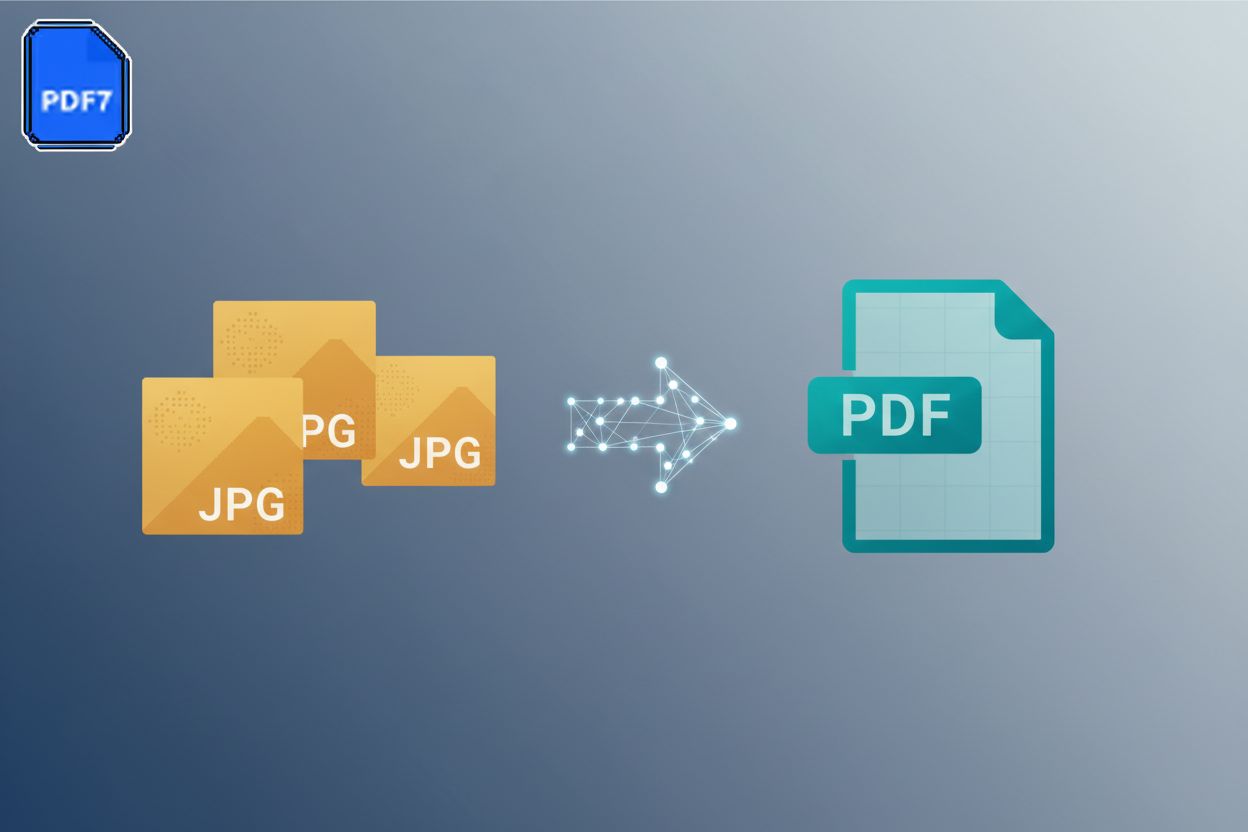
Combine JPG Images Into a Single PDF: A Visual Guide

TL;DR
- This guide walks you through combining multiple JPG images into a single PDF document, perfect for sharing or archiving. It covers online tools like Adobe Acrobat and Smallpdf, as well as free methods available on Windows and Mac operating systems. You'll learn how to maintain image quality and organize your files efficiently, with clear visual aids every step of the way.
Introduction: The Evolving Threat Landscape
Okay, so, things are getting kinda crazy out there... Cyber threats are evolving at, like, warp speed, right? (Cyber Threats Are Evolving Faster Than Defenses - Forbes) It's not just your run-of-the-mill viruses anymore. We're talking about a whole new level of sophistication. ([PDF] FOREIGN TRADE BARRIERS - USTR)
- ai is now being used to craft hyper-realistic phishing emails that can fool even the most seasoned employees. (When AI Meets Phishing: A Modern Gmail Nightmare - StrongestLayer) Imagine the damage a well-placed spear-phishing attack could do to a healthcare provider.
- Attack strategies are becoming automated, scaling up, and becoming more efficient. Think about retail, where automated bots can launch credential stuffing attacks against millions of accounts simultaneously.
- Traditional security measures, the old-school way of doing things, often rely on manual checks and predefined rules. They're frequently too slow to react to new threats, too reactive rather than proactive, and can miss subtle vulnerabilities that don't fit a known pattern. This leaves organizations vulnerable to rapidly evolving attacks.
We need something that can think like the bad guys, but, you know, for good. That's where ai red teaming comes in.
What is AI Red Teaming?
Okay, so you know how companies hire "red teams" to try and break into their systems? ai red teaming is kinda like that, but on steroids.
Basically, it's using ai to simulate real-world attacks and find weaknesses in your security. Instead of relying solely on humans, you're unleashing ai algorithms to probe your systems, identify vulnerabilities, and generally cause controlled chaos – all in the name of making things more secure.
- Simulating Real-World Attacks Using ai: Forget predictable penetration tests. ai can adapt and evolve its attack strategies like a real hacker. Imagine an ai that's constantly learning new phishing techniques, crafting more convincing malicious code, or finding zero-day exploits faster than any human could. For example, in finance, an ai red team could simulate sophisticated fraud attempts to test the resilience of transaction monitoring systems.
- Identifying Vulnerabilities and Weaknesses: ai excels at finding patterns and anomalies that humans might miss. This could be anything from misconfigurations in your cloud infrastructure to subtle flaws in your application code. Think about healthcare providers; an ai could be used to scan electronic health records (ehrs) systems for vulnerabilities that could expose sensitive patient data.
- Improving Security Posture Through Proactive Testing: ai red teaming isn't just about finding problems; it's about fixing them before the bad guys do. By continuously testing and monitoring your systems, you can proactively address vulnerabilities and strengthen your overall security posture. Retailers can use ai to continuously test their e-commerce platforms for vulnerabilities like sql injection or cross-site scripting (xss) attacks.
ai red teaming uses a bunch of cool techniques under the hood. We're talking ai-driven vulnerability scanning that goes way beyond your average scanner. It also includes automated penetration testing, fuzzing (throwing random data at systems to see what breaks), and even adversarial machine learning – where one ai tries to attack another one. Adversarial machine learning is particularly useful for testing the robustness of AI-powered security systems themselves, seeing if they can be tricked or bypassed. Reinforcement learning can even be applied to have an ai learn the best way to penetrate a system through trial and error.

So, how's this different from the old-school way of doing things? Well, ai brings speed and scalability to the table. It can continuously test and monitor systems, uncovering hidden vulnerabilities that manual testing might miss. Plus, it reduces the reliance on manual effort, freeing up your security team to focus on more strategic tasks.
Next up, we'll look at how ai red teaming compares to those traditional methods.
Why AI Red Teaming Matters
Okay, so, why should you even care about ai red teaming? I mean, besides the fact that it sounds super cool? Well, let's just say it's kinda like having a super-powered immune system for your entire digital presence.
Identifying vulnerabilities before attackers exploit them: This is huge. Instead of waiting to get hacked, ai red teaming actively seeks out weaknesses. Think of it like this: ai can find the loose screws in your systems before they cause the whole thing to fall apart. For example, in the financial industry, ai red teams can simulate complex phishing attacks targeting employees, identifying gaps in security awareness training and email filtering systems. This proactive approach is a stark contrast to traditional methods that often react only after an incident.
Improving incident response capabilities: When (not if) an incident happens, you need to be ready. ai red teaming helps you practice and refine your response plans, so you're not scrambling when a real attack occurs. It's like a fire drill, but for cyberattacks.
Reducing the risk of data breaches and financial losses: Data breaches are expensive, and they can ruin your reputation. ai red teaming helps you minimize that risk by finding and fixing vulnerabilities before they can be exploited. Like, imagine the cost savings if a retailer prevents a massive data breach that exposes millions of customer credit card numbers.
Strengthening defenses against advanced threats: ai red teaming isn't just about finding basic vulnerabilities. It's about preparing you for the really sophisticated attacks that are becoming more and more common. Think about nation-state actors or advanced persistent threats (apts) – ai can help you defend against those too.
Ensuring compliance with industry regulations: Many industries have strict security regulations, like hipaa in healthcare or pci dss for credit card processing. ai red teaming can help you demonstrate compliance by showing that you're proactively testing and improving your security posture.
Building trust with customers and stakeholders: In today's world, security is a competitive advantage. By investing in ai red teaming, you're showing your customers and stakeholders that you take their security seriously.
Automating repetitive tasks: Let's be real, manual security testing can be tedious and time-consuming. ai can automate many of these tasks, freeing up your security team to focus on more strategic initiatives.
Reducing the need for manual testing: While humans are still essential, ai can augment their capabilities and reduce the overall reliance on manual effort.
Optimizing resource allocation: By identifying the most critical vulnerabilities, ai red teaming helps you prioritize your security investments and allocate resources more effectively.
So, yeah, ai red teaming matters. It's not just a fancy buzzword – it's a powerful tool that can help you stay ahead of the evolving threat landscape. Now, let's look at some practical ways it's being used.
Practical Applications of AI Red Teaming
Okay, so you're probably wondering where ai red teaming actually makes a difference in the real world, right? It's not just some theoretical exercise, promise! Let's dive into some practical ways it’s being used.
- Securing Cloud Environments: You know, everyone's moving to the cloud, but is it really secure? ai red teaming can help find those sneaky misconfigurations in your cloud setup that could leave you exposed. Think about it: an ai constantly scanning your aws or azure environment, looking for open ports, weak access controls, and other vulnerabilities. It ensures your data protection strategy is solid.
- Protecting Web Applications and apis: Web apps are basically the front door to your business, right? ai can help slam that door shut on attackers. It can automatically fuzz apis to find vulnerabilities, detect cross-site scripting (xss) holes, and generally make sure your web apps are rock solid. This is super important in e-commerce, where a single vulnerability can lead to massive data breaches.
- Enhancing iot Security: The internet of things (iot) is exploding, but iot security? Not so much. ai red teaming can help find vulnerabilities in iot devices and networks, preventing iot-based attacks. imagine ai finding a backdoor in a smart thermostat that could be used to access your entire home network. Scary stuff, right?

Let's say you're running an e-commerce platform. An ai red team could simulate thousands of different attack scenarios, from sql injection to denial-of-service attacks, to see how your system holds up. It's like a stress test for your security, but way more effective than just running a vulnerability scanner.
So, yeah, ai red teaming isn't just a cool concept – it's a practical way to improve your security posture and stay ahead of the bad guys.
Getting Started with AI Red Teaming
Okay, so you're sold on ai red teaming, but where do you even start? It can seem daunting, but trust me, it's not as scary as it looks. Think of it as building a really, really good security habit.
Assessing Your Organization's Needs: First things first: what are you really trying to protect? You need to figure out your crown jewels – those critical assets that would cause the most damage if compromised. Is it patient data in healthcare, financial transactions in finance, or customer data in retail? Once you know what's most important, you can start identifying potential vulnerabilities and defining your security goals. Don't just say "be secure"; be specific: "reduce data breach risk by 20% in the next year." And hey, don't forget to check what security measures you already have in place – no use reinventing the wheel, right?
Choosing the Right ai Red Teaming Tools and Solutions: Okay, now for the fun part – picking your weapons! There's a bunch of ai red teaming platforms out there, and they're not all created equal. You gotta think about what features you need, how much you're willing to spend, and how easy it is to use. You'll want to consider categories like:
- Automated Vulnerability Scanners: These go beyond basic scans, using ai to identify more complex weaknesses.
- Attack Simulation Platforms: Tools that can mimic real-world attack tactics and techniques.
- Adversarial ML Tools: For testing the resilience of your own AI-powered security systems.
- Cloud Security Posture Management (CSPM) Tools: Specifically for identifying misconfigurations in cloud environments. Do you need a tool that specializes in cloud security, web application security, or iot device security? Picking the right tools is crucial – it's like picking the right ingredients for a recipe; you can't make a cake with just flour, can you?
Integrating ai Red Teaming into the sdlc: This is where things get really interesting. ai red teaming shouldn't be a one-off thing; it should be baked into your entire software development lifecycle (sdlc). That means incorporating ai-powered security testing early and often. Automate those tests so they run automatically every time you make a change to your code. And don't forget to continuously monitor and improve your security posture based on the results. Think of it as continuous integration, but for security – continuous security, if you will.
AppAxon: ai-Driven Autonomous Threat Modeling and Red-Teaming: Now, let's talk about proactive product security. Companies like AppAxon are offering ai-driven autonomous threat modeling capabilities and they're pretty neat. They're all about continuous, ai-powered security tools integrated right into your development workflows. Their approach is noteworthy because it emphasizes embedding security testing throughout the development process, aiming to secure software before breaches happen, not after. As we've noted earlier, preventing breaches before they occur can significantly reduce the risk of data breaches and financial losses.

So, there you have it – a quick guide to getting started with ai red teaming. It's not a silver bullet, but it's a powerful tool that can help you stay ahead of the curve.
Conclusion: The Future of Cybersecurity with AI Red Teaming
So, where does all this ai red teaming stuff leave us? Honestly, right on the edge of a whole new era for cybersecurity. It's not just about if you'll embrace ai, but how you'll use it to stay ahead.
ai-driven security solutions are becoming essential. Think of ai not just as a tool, but as a partner that is always learning and adapting to new threats. For instance, retailers can use ai to predict and prevent fraud in real-time by analyzing transaction patterns and flagging suspicious activities before they impact customers. This continuous learning and adaptation is a key differentiator from static, traditional security measures.
ai is shaping the future of cybersecurity, from threat detection to incident response. In healthcare, ai can automate threat modeling to identify potential vulnerabilities in medical devices, ensuring patient safety and data privacy. The ability of ai to scale and operate continuously offers a level of proactive defense that was previously unattainable.
The more ai "red teams," the smarter they get, constantly refining their attack strategies and defenses. In finance, ai can continuously analyze security logs and identify anomalies, improving threat detection and response times. This ongoing evolution means that ai red teaming isn't a one-time fix, but a dynamic process that keeps pace with evolving threats.
It's time to get on board with ai red teaming. Explore solutions, start testing, and, most importantly, be proactive about security. The future is here, and it's secured by ai.