How Photographers Deliver Client Proofs as Compressed PDFs


TL;DR
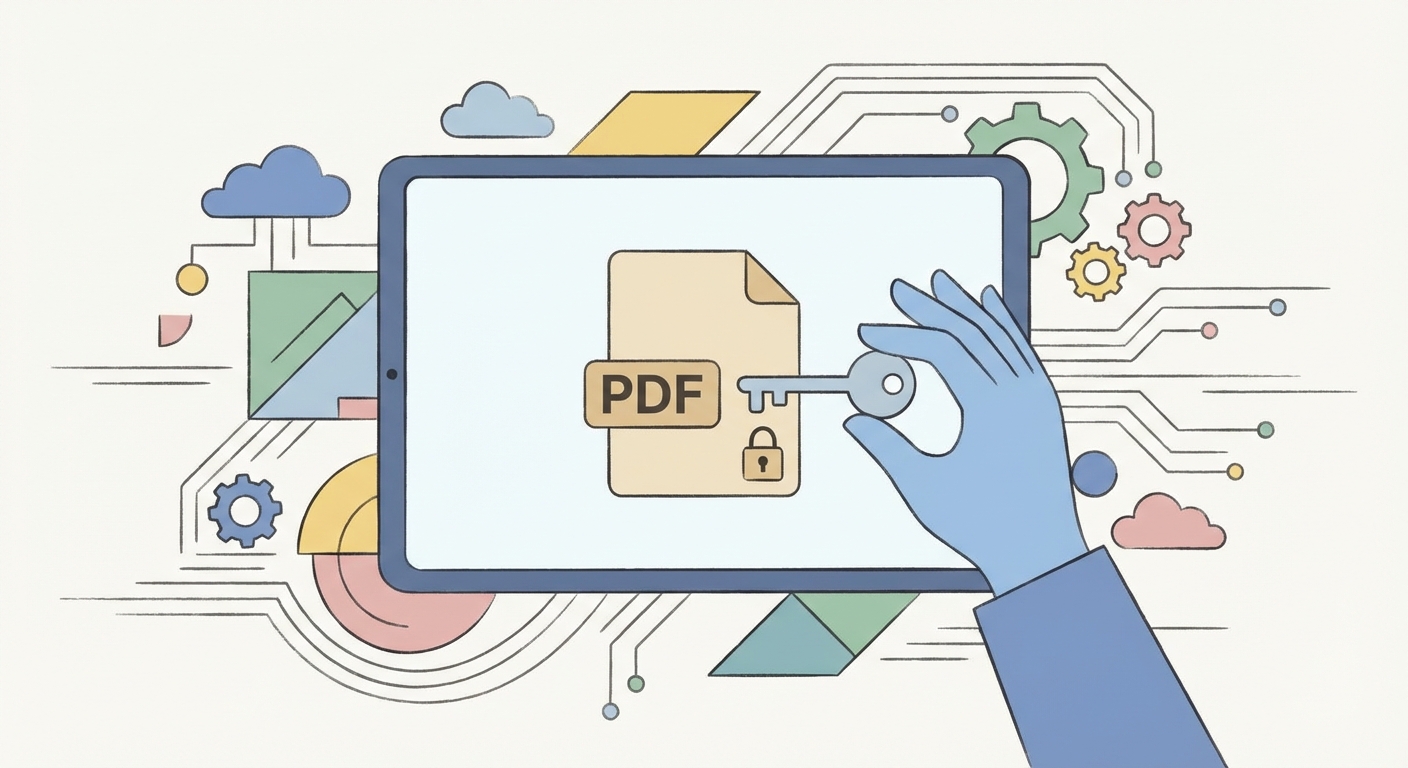
- This article covers why photographers use compressed pdfs to share work with clients without loses of quality. You'll learn about image to pdf conversion, batch processing, and using tools like pdf7 to keep files small for email while keeping them look good. We also talk about security features like passwords to protect your art.
The Evolution from Chatbots to Agentic ai
Ever wonder why your company's chatbot still feels like a glorified faq page? It's because we're finally moving past those "if-this-then-that" bots into the era of agentic ai, where software actually thinks for itself.
Most bots we use today are deterministic—they just follow a script. If you go off-script, they break. Agents are non-deterministic, meaning they use reasoning tokens to figure out the best path to a goal on their own.
- Agency and Autonomy: Unlike a co-pilot that waits for you to click a button, an agent has the "power to act," as noted by Deloitte in their 2025 predictions.
- Reasoning over rules: They don't just match patterns; they plan. An agent can take a vague goal like "fix this bug" and actually hunt through the codebase to find it.
- Multimodal Skills: Next-gen agents (or agents 2.0) can "see" images and "hear" audio to solve problems across different systems like jira or github.

Right now, everyone is talking about it, but few are doing it at scale. A 2025 study by McKinsey found that 62% of organizations are at least experimenting with ai agents, but only about 23% are actually scaling these systems. (The State of AI: Global Survey 2025 - McKinsey)
The real shift happens when companies stop looking for tiny efficiency gains and start using agents for growth. For example, Goldman Sachs Research suggests that by 2030, the agent portion of the software market could account for over 60% of the total profit pool.
Reasoning Architectures: How They Actually "Think"
We keep saying agents "think," but what does that actually look like in the code? It's not magic; it is specific architectures that let the model pause and plan before it blurt out an answer.
- Chain-of-Thought (CoT): This is the basic one. The agent breaks a big problem into smaller steps, writing out its "thoughts" as it goes. It's like showing your work in math class.
- ReAct (Reason + Act): This is where things get real. The agent thinks about what it needs, takes an action (like searching a database), observes the result, and then thinks again. It’s a loop of logic and doing.
- Tree-of-Thought: For really hard stuff, the agent explores multiple "branches" of reasoning at once. If one path looks like a dead end, it backtracks and tries another way.
By using these frameworks, an agent doesn't just guess the next word—it actually builds a strategy to solve the task you gave it.
Core Frameworks and Orchestration for Agents
So, you've got the "why" down. But how do we actually build these things without them going off the rails? It's not just about one big model anymore; it's about an orchestration layer that acts like a project manager for your code.
To get these systems running, most folks are turning to frameworks like lang chain, crew ai, or auto gen. These aren't just libraries; they're the glue between your llm and the real world.
- lang chain is the veteran here, great for chaining together complex prompts and data retrieval.
- crew ai is cooler if you want "role-playing" agents—one agent acts as a researcher, another as a writer, and they talk to each other to finish a task.
- auto gen is all about multi-agent conversations, letting bots solve problems through back-and-forth dialogue.
As Ali Hassaan Mughal points out, we're moving toward the multimodal reasoning I mentioned earlier. This technical orchestration allows the agent to process a UI screenshot or "hear" a customer's tone to decide what to do next in real-time.

Honestly, the biggest headache is connecting new ai to old "legacy" systems. This is where specialist integrators like technokeens come in. They specialize in building custom it solutions that bridge that gap, making sure an agent can actually talk to your 10-year-old database or a clunky mobile app. It's about business process automation that doesn't break the stuff you already have.
As mentioned earlier, most companies are still just playing around. While the McKinsey stats show 62% experimenting, the jump to that 23% scaling mark is where the real engineering happens.
Security Governance and IAM for ai Agents
Look, giving an ai agent the keys to your database is terrifying. It’s like hiring a brilliant intern who can work at 1,000mph but doesn't quite understand why they shouldn't email the entire payroll list to a random vendor.
For these systems to actually work, we have to stop treating them like "tools" and start treating them like employees. That means giving them their own service accounts and unique tokens. If an agent uses a generic api key, you’ll never know if a mistake was made by the bot or a human.
- Zero Trust is mandatory: Never give an agent broad access. Use rbac (role-based access control) so a "marketing agent" can't even see the "finance" folders.
- Context Redaction: Agents can accidentally leak secrets in their logs. You need middleware that "scrubs" sensitive data before it hits the llm.
- Identity Federation: Use certificates and short-lived tokens. If an agent gets compromised, you want that access to expire in minutes, not months.

The McKinsey study noted that nearly one-third of organizations are seeing negative consequences from ai inaccuracy. This is why audit trails are a big deal. You need to track every "thought" the agent had—not just the final answer.
Scaling and Performance Optimization
Scaling these agents is a whole different beast than just running a single prompt. Once you move past the "wow" phase of a pilot, you realize that managing 500 agents is basically like managing a massive, caffeinated workforce that never sleeps but also costs a fortune in tokens.
Most folks start on the cloud because it's easy, but if you're in a high-security industry like healthcare or finance, you'll probably end up with a hybrid setup. You need a solid vector database to handle long-term memory, otherwise, your agent forgets what it did ten minutes ago.
- Memory Management: Agents need "state." Without it, they're just goldfish. We use tools to store past interactions so the ai doesn't repeat mistakes.
- Cost Control: High-token usage can kill your budget. You gotta implement caching for common queries and use smaller models for easy tasks.
- Scaling logic: You can't just throw more gpu at the problem. You need an orchestration layer that spins agents up and down based on the queue.

You can't just set them loose. According to The state of AI in 2025: Agents, innovation, and transformation by McKinsey, the gap between experimenting and scaling is huge because debugging an "agentic loop" where two bots just argue with each other is a nightmare.
Practical Use Cases across Industries
So, where does the rubber actually meet the road with all this agent stuff? It is not just about chatbots anymore; it is about delegating actual work that used to eat up your entire Tuesday afternoon.
- DevOps and Engineering: You got agents acting as autonomous pr reviewers. They don't just find syntax errors—they suggest architecture fixes and merge code once the tests pass.
- Finance Compliance: In heavy regulated sectors, agents scan new laws and compare them to internal docs, proactively flagging risks before a human even opens the file.
- Marketing: We are seeing hyper-personalized content where an ai agent researches a lead, drafts a custom pitch, and updates the crm without any manual data entry.

The future of this tech isn't just about "cool" demos; it's about the roi of getting hours back in the day. Whether it's healthcare agents cross-referencing patient data or dev agents fixing bugs, the goal is moving from simple assistance to full workflow ownership. The productivity boost is becoming too big to ignore, and the companies that figure out the reasoning and scaling bits now are the ones who'll actually win.