How to Extract Just the Pages You Need From a Long PDF

TL;DR
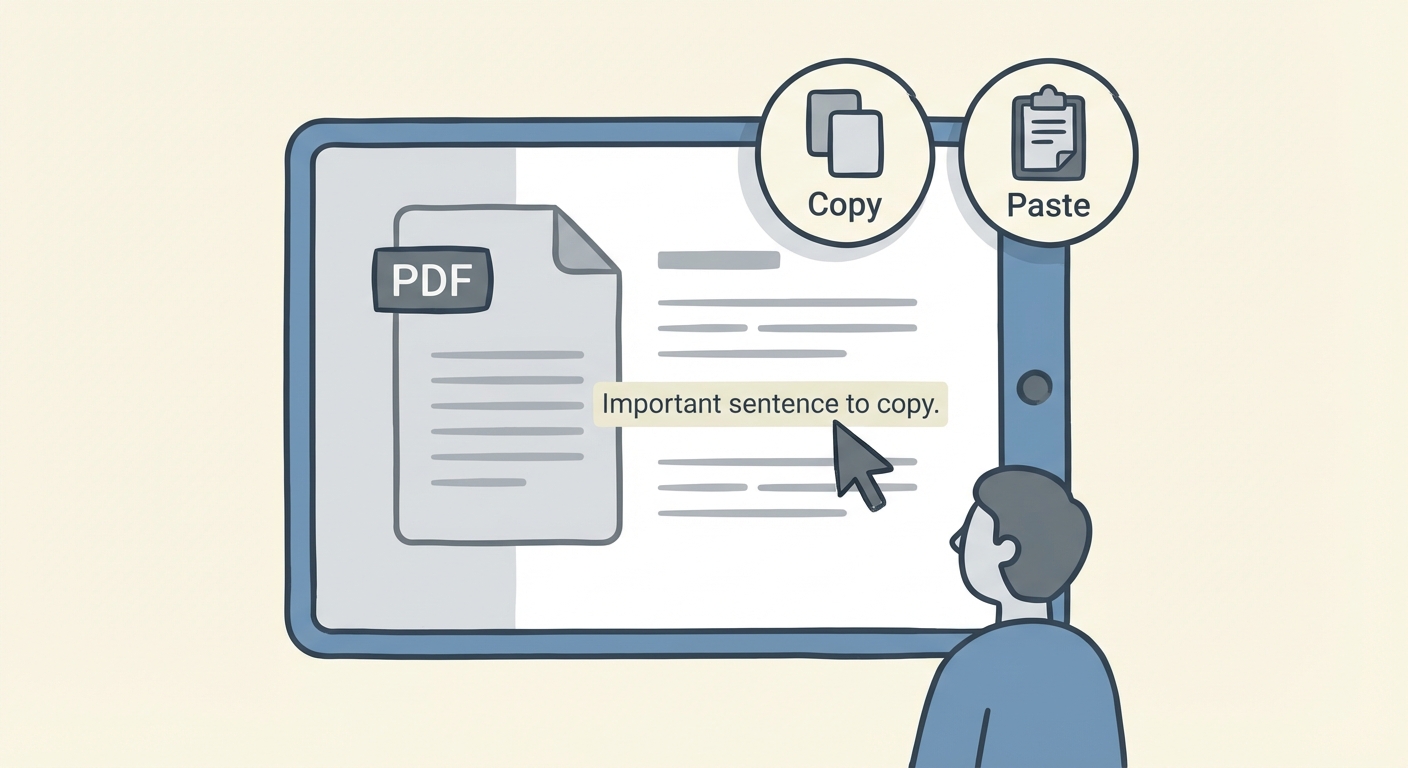
- This article covers how to extract specific pages from lengthy PDFs, saving you time and storage space. We'll explore various methods, including using online tools, desktop software, and even some handy command-line options, ensuring you can quickly isolate the information you need without wrestling with the entire document.
Introduction: What Exactly Are AI Agents?
Alright, let's dive into what ai agents really are. It's kinda mind-bending when you think about it.
- Basically, these are autonomous entities that can do stuff on their own. Think of it as a digital worker bee.
- They can see what's going on, think about it, and then do something. Like, for real.
- But don't get them mixed up with just chatbots or assistants, okay? Ai agents are a whole different level of smarts.
So, ready to get into the nitty-gritty of how these things work?
Categorizing AI Agents by Decision Logic
AI agents are like digital brains making decisions, but how do they decide? It's not just one way, turns out. They range from super simple to crazy complex, kinda like, you know, us humans.
So, these ai agents, they come in flavors based on how they, uh, think. It's all about the decision-making process, see?
- Simple Reflex Agents: These are your basic "if this, then that" agents. Like a thermostat, it just reacts to the temperature, no memory involved. Not exactly rocket science, but useful!
- Model-Based Reflex Agents: Now we're getting somewhere. These guys have a little model of the world in their head. They remember stuff, so they can handle things even if they can't see everything. Think smart home assistants adjusting lights based on habits.
- Goal-Based Agents: These agents have a mission! They plan actions to hit specific goals. Like a navigation app finding the best route. Technokeen's expertise in Business Process Automation & Management Solutions can help streamline your operations by integrating goal-based AI agents. [https://technokeen.com]
- Utility-Based Agents: Okay, these are the smarty-pants. They don't just have goals, they want to maximize "utility." In this context, utility refers to a measure of desirability or value. For example, a self-driving car might aim to maximize utility by balancing safety (minimizing risk), speed (minimizing travel time), and fuel efficiency (minimizing cost). It's about finding the best outcome among many possibilities.
- Learning Agents: The cool kids. They learn from experience, using feedback to get better. Recommender systems are a prime example. They learn by observing your interactions – what you click on, what you buy, what you rate highly. This feedback is used to refine their understanding of your preferences, allowing them to make increasingly accurate and personalized suggestions over time, often through mechanisms like reinforcement learning.
Multi-Agent Systems (MAS)
Ever think about how cities could run smoother if everything talked to each other? That's where multi-agent systems (mas) come in. Imagine a bunch of ai agents all working together, or even competing, in a shared space. These systems are designed for scenarios where multiple autonomous agents interact to achieve individual or collective goals. The complexity arises from the coordination, communication, and potential conflicts between these agents.

Think smart traffic lights adjusting in real-time, or supply chains that magically optimize themselves. It's like a digital ecosystem.
AI Agent Categories by Functional Roles
Alright, buckle up, because ai agents? They don't just think, they do. It's like giving software a job description, not just a set of instructions. The decision logic we just talked about dictates how they make choices, but these functional roles describe what they're designed to accomplish.
Think of functional roles as the different hats ai agents can wear. You wouldn't ask your accountant to fix your car, right? Same deal here.
Customer Agents: These guys are your 24/7 front line. They're chatting, answering questions, and generally keeping customers happy. Imagine a chatbot that actually solves your problem instead of just looping you back to the FAQ. These agents often possess advanced natural language understanding, context retention, and can integrate with backend systems to access customer data and execute actions, making them far more capable than basic chatbots.
Employee Agents: Think of these as digital assistants for your team. They handle the boring stuff - onboarding, scheduling, maybe even HR paperwork. Anything to free up humans for the creative, strategic work.
Creative Agents: Okay, this is where it gets interesting. Content creation is hard, but these agents can help. Drafting social media posts, generating graphics, even writing articles (uh oh!). It's like having a digital brainstorming buddy. While they can be powerful tools for ideation and drafting, current limitations often lie in nuanced emotional expression, originality, and ethical considerations around authorship and potential job displacement for human creatives. They often work best in collaboration with human oversight.
Data Agents: Data, data everywhere, but not a drop to drink, right? These agents wrangle the massive amounts of information. Their functions include data cleaning, transformation, analysis, pattern recognition, and insight generation. They help make sense of complex datasets, enabling better decision-making.
Code Agents: Got a bug? Need a snippet? These agents are the coder's best friend. They can detect errors, optimize code, and even generate new code from natural language. It's like pair programming with a super-smart, tireless robot.
Security Agents: These are the digital bodyguards, constantly monitoring systems for threats and anomalies. Fraud detection, security copilot tools – they're the silent protectors of your digital kingdom.
So, that's the rundown on functional roles. Next up, we'll check how these fellas collaborate and communicate.
Real-World Applications Across Industries
Okay, so you're probably wondering how ai agents are actually being used out in the wild, right? It's not just sci-fi anymore, promise!
- E-commerce & Customer Service: Think about those product recommendations you see online. Those aren't just random – learning agents are analyzing your browsing history to suggest stuff you might actually want. And instead of waiting on hold forever, customer service chatbots can help a lot faster, learning from past chats to give better answers.
- Financial Services: Fraud detection is a big one. Ai agents are constantly watching for fishy transactions, adapting to new scam tactics. You could say they're the digital detectives of the finance world.
- Healthcare: Ai agents are diving into patient monitoring, looking for changes in vital signs that might need attention, and even helping doctors make treatment recommendations based on tons of data.
It's pretty wild how these things are popping up everywhere, isn't it?
Pros and Cons of AI Agents
Alright, so ai agents sound cool and all, but are they actually worth the hype? Like, everything got pros and cons, right?
Pros:
- Enhanced Efficiency and Productivity: Ai agents can automate repetitive, time-consuming tasks, freeing up human workers for more complex and strategic activities. This leads to significant gains in productivity across various sectors.
- Cost-Effectiveness: Over time, automating tasks with ai agents can reduce labor costs, minimize errors, and optimize resource allocation, leading to substantial cost savings.
- 24/7 Availability: Unlike human employees, ai agents can operate around the clock without breaks, ensuring continuous service and support, especially in customer-facing roles.
- Scalability: Ai agents can be easily scaled up or down to meet fluctuating demands, making them a flexible solution for businesses.
- Data Analysis and Insights: Agents excel at processing vast amounts of data, identifying patterns, and generating insights that might be missed by humans, leading to better-informed decisions.
- Potential for Innovation: By handling routine tasks and assisting in complex problem-solving, ai agents can accelerate research and development, driving innovation.
Cons:
- Job Displacement: A significant concern is the potential for ai agents to automate jobs currently performed by humans, leading to unemployment and the need for workforce retraining.
- Security Risks: Ai agents can be vulnerable to cyberattacks, data breaches, and manipulation, posing significant security risks if not properly protected.
- Ethical Concerns and Bias: Ai agents can inherit biases from the data they are trained on, leading to unfair or discriminatory outcomes. Ensuring ethical development and deployment is crucial.
- High Initial Investment: Developing and implementing sophisticated ai agent systems can require substantial upfront investment in technology, infrastructure, and expertise.
- Need for Human Oversight: Despite their autonomy, ai agents often require human supervision to ensure they are operating correctly, ethically, and in alignment with organizational goals. Complex or novel situations may still require human judgment.
- Complexity and Maintenance: Managing and maintaining complex ai agent systems can be challenging, requiring specialized skills and ongoing updates.
- Potential for Misalignment: If an agent's goals or reward functions are not perfectly aligned with human intentions, it could lead to unintended and potentially harmful consequences.
Future Trends and Challenges
Okay, so what does the future really hold for ai agents? It's not just about robots taking over, or is it? Nah, probably not.
Agentic AI Advancement: Agentic ai is definitely going to be a big deal. It's all about making systems that can actually do stuff themselves, without needing humans to hold their hands all the time. Think like self-managing inventory, but for everything. This means agents will become more proactive and capable of independent problem-solving.
Generative Agents: Generative agents are going to get wild. Imagine ai agents that can create marketing campaigns from scratch or design entire product lines. Forget writer's block, hello digital brains. This area is rapidly evolving, pushing the boundaries of what AI can create.
Enhanced Reasoning and Understanding: Smarter agents are on the way too. Like, ai agents that can actually reason and understand complex situations, not just follow simple rules. It's like giving them a real brain and some common sense, finally. This will enable them to handle more nuanced and ambiguous tasks.
Computational Demands: All that smarts comes at a cost, tho. We're talking serious computing power and memory to run these things. This often requires specialized hardware like GPUs and distributed computing systems, which can be a barrier to widespread adoption or real-time operation for smaller organizations.
Infinite Feedback Loops: Infinite feedback loops? Yep, that's a worry. If ai agents aren't designed right, they could end up in these crazy, never-ending cycles. This happens when an agent's actions continuously influence its perception or decision-making in a way that doesn't converge to a stable or useful state, potentially leading to resource wastage or unstable behavior.
Ethical Considerations and Bias Mitigation: And, of course, we gotta talk about ethics. Ai agents making decisions on their own? That needs some serious human oversight to make sure they're not biased or doing anything, well, evil. Ensuring fairness, transparency, and accountability in AI decision-making is a major ongoing challenge.
So, yeah, exciting times ahead, but we gotta keep our eyes on the ball.